Have I Been Pwned: check if your email has been breached
A free website tells you in one minute if your email and password have ended up in stolen dark web lists. How to use it and the three moves: passwords, 2FA, and managers.
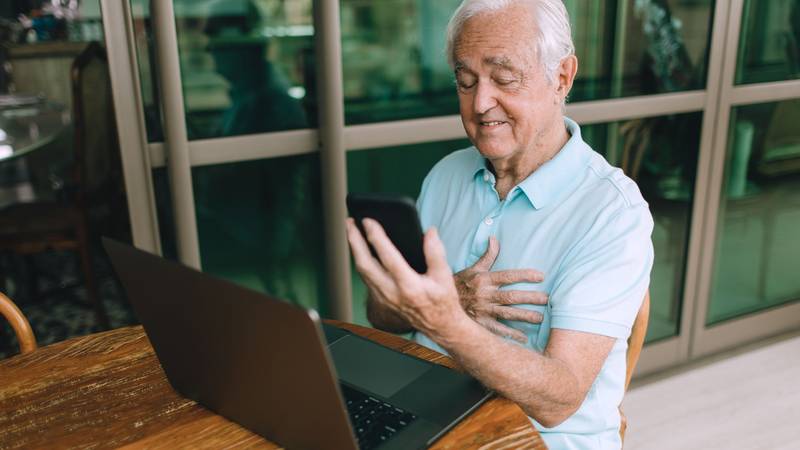
Have you ever received an email containing one of your old passwords, written in black and white, along with a request for a Bitcoin ransom? It is a very common scam, and it is chilling. The question arises spontaneously: how do they have it? The answer is simple and a bit unsettling. That password had already been circulating for some time, stolen in one of the many data breaches of recent years.
There is a free site to verify this in a few seconds. It's called Have I Been Pwned—loosely translated as "have I been screwed"—and can be found at the address haveibeenpwned.com. It was created in 2013 by Troy Hunt, an Australian security expert respected worldwide. Today, its archive counts over 17.8 billion compromised addresses, originating from 1,045 website and service breaches. It is used by individuals, companies, and even governments.
An honest clarification: the site does not scout the dark web in real-time. It collects and catalogs stolen databases released by criminals—the same lists sold and traded specifically on the dark web, the hidden part of the internet unreachable by standard search engines. If your address appears there, someone already possesses it.
The check takes a minute. You open the site, type your email address into the box, and click on Check. If the green text "Good news" appears, there is no trace. If instead "Oh no, pwned" appears, the site lists the services involved, the date of the breach, and the types of data that ended up in someone else's hands: passwords, phone numbers, addresses, and sometimes dates of birth. I recommend checking all the email addresses you use, including the old one opened back in the days of your first computer and never used since.
If you end up on the list, don't panic. Here is what to do, in the right order.
The first move is to change the password for the service involved and for all accounts where you used the same one. This is where the real danger lies. Criminals try the same combination of email and password on banks, email, Amazon, and social media. A recycled password works like a single key for your house, car, and office: whoever finds it can enter everywhere.
The second move is to activate two-step verification, which experts call 2FA. In addition to the password, the service asks for a code received on your phone or generated by an app like Google Authenticator or Microsoft Authenticator. Even with your password in their pocket, the thief remains outside the door. Where the site offers it, it is advisable to switch to passkeys—digital keys linked to your phone and activated with your fingerprint or face.
The third move is to rely on a password manager, a digital vault such as Bitwarden, 1Password, or the Passwords app already present on iPhone and Mac. It creates long, unique passwords for every site and remembers them for you. You only have to remember one: the master password.
On the site, you will also find two valuable features. With "Notify Me," you can leave your address and receive a free alert upon the next breach. In the "Passwords" section, you can check if a password has already appeared in stolen lists without ever sending it in full: the site receives an encrypted fragment and never sees the actual password.
Pay attention also in the weeks following a breach. Very credible fake emails and SMS often arrive because scammers know your name and the service you use. In Switzerland, suspicious cases are reported to the National Cyber Security Centre (NCSC) via the website ncsc.admin.ch. And for companies in Ticino, a reminder: since September 2023, the new Federal Act on Data Protection requires notifying the Federal Data Protection and Information Commissioner of breaches involving a high risk for the individuals concerned.
Do it now, before turning the page. One minute today is worth more than a thousand worries tomorrow. And if the result scares you, write to me in the digiTIamo WhatsApp community: we can talk about it together.
Photo: Sora Shimazaki / Pexels

digiTIamo · volunteer journalism
Enjoyed it? The next round is on you.
digiTIamo is my volunteer project: I write it for passion, in my own time, for people who want to understand technology without getting fooled. No paywall, no subscription. If this article helped you, buy me something: I turn it into time for the next one.
Secure payment with Stripe. Card details never touch this site.
Your contribution goes to LucaCarbone OÜ, my company. It is not a tax-deductible donation. Privacy