Starting in July, your carrier will warn you if a number is fake
Starting July 1st, Swiss operators will block spoofed numbers. But against an AI-cloned voice, that isn't enough: a family password is the way to go.
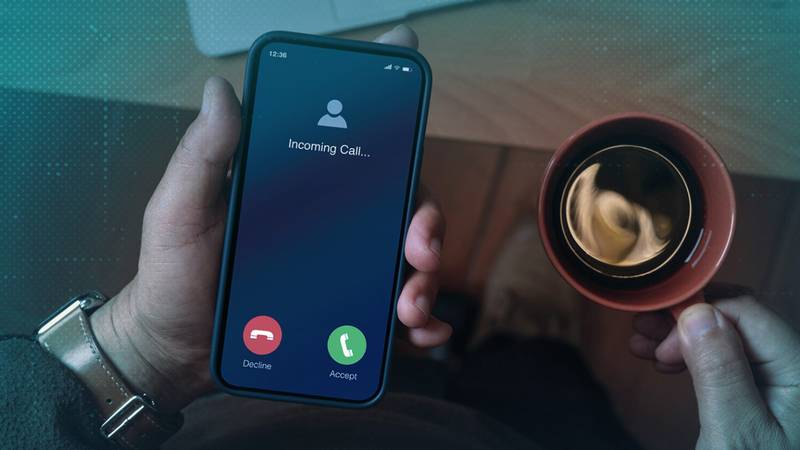
On June 2nd, the Ticino Cantonal Police stopped two individuals as they were picking up money and jewelry from a victim. You already know the preceding scene: a phone call, a voice posing as a police officer, a relative presented as being involved in a robbery, and a demand for immediate payment to keep them out of jail. This didn't happen in Milan or Zurich. It happened in Ticino.
These deceptions have a technical name, shock calls, and they have replaced the old "grandchild scam." The National Cybersecurity Centre has recorded a tripling of calls made in the name of fake authorities within a year. The reason for this growth is that two technologies have converged.
The first is spoofing, which is the falsification of the number that appears on the display. The scammer calls from abroad and the number of your bank, municipality, or the police appears on your phone. The second is voice cloning. Today, just a few seconds of audio—taken from a video posted on social media or a voice message—are enough to generate an artificial voice identical to your son's or daughter's. It isn't science fiction, and it costs almost nothing.
On this front, there is some good news, and it is very recent. As of July 1st this year, Swiss telecommunications providers are required to label suspicious mobile numbers as unknown, or to block them entirely when fraudulent use is evident. The same rule has already been in place since the beginning of the year for landline numbers, and since last November, filters against advertising calls have been active automatically. These measures are imposed by the Federal Office of Communications and work without you having to configure anything.
That being said, do not delude yourself into thinking the problem is solved. The filter intercepts spoofed numbers, not calls made from real foreign numbers—which scammers are already using—nor WhatsApp messages. And above all, it doesn't touch the true weak point, which isn't the display. It's the ear.
Against a well-cloned voice, there is no auditory defense. Don't even try. The defense is a system decided upon once, in a calm moment, which panic cannot dismantle.
The first step is a family password. Choose a word or a short phrase, agreed upon with children, grandchildren, and parents, to be asked when someone calls in an emergency. It must be a real secret, not the dog's name or the home address, because that information is all over social media. If they can't say it, they aren't who they claim to be.
The second step is a single rule, always valid: hang up and call back. Never call back the number the call came from. Dial the number you have had in your contacts for years. If they don't answer, call another relative. In the meantime, no one hands anything over to anyone. No Swiss authority, under any circumstances, sends someone to pick up cash, gold, or jewelry from a home.
The third step concerns your content. Those who post videos of themselves speaking on social media are giving away the raw material. I'm not saying stop, I'm saying be aware. Those who run a business should also set a written rule: no bank transfer is initiated via vocal order, even if the owner's voice is on the phone. "CEO scams" work exactly like this, and Ticino's SMEs are not too small to be targeted.
If an attempt occurs, the call to make is to 117. If instead it came via email, SMS, or WhatsApp, there is a reporting form from the National Cybersecurity Centre, which collects cases and allows for intervention on the channels used. Reporting seems useless in the moment, but that is how numbers get blocked.
One last thing, which is worth more than any technical advice. Victims often do not report out of shame. I have spoken with brilliant, lucid people who fell for it completely. It's not a matter of being naive; it's a matter of being caught at a moment when fear for a child shuts down reasoning. Talk about it at the table this Sunday, with your parents and your children. A ten-minute conversation today is worth more than any filter activated by a service provider.

digiTIamo · volunteer journalism
Enjoyed it? The next round is on you.
digiTIamo is my volunteer project: I write it for passion, in my own time, for people who want to understand technology without getting fooled. No paywall, no subscription. If this article helped you, buy me something: I turn it into time for the next one.
Secure payment with Stripe. Card details never touch this site.
Your contribution goes to LucaCarbone OÜ, my company. It is not a tax-deductible donation. Privacy